

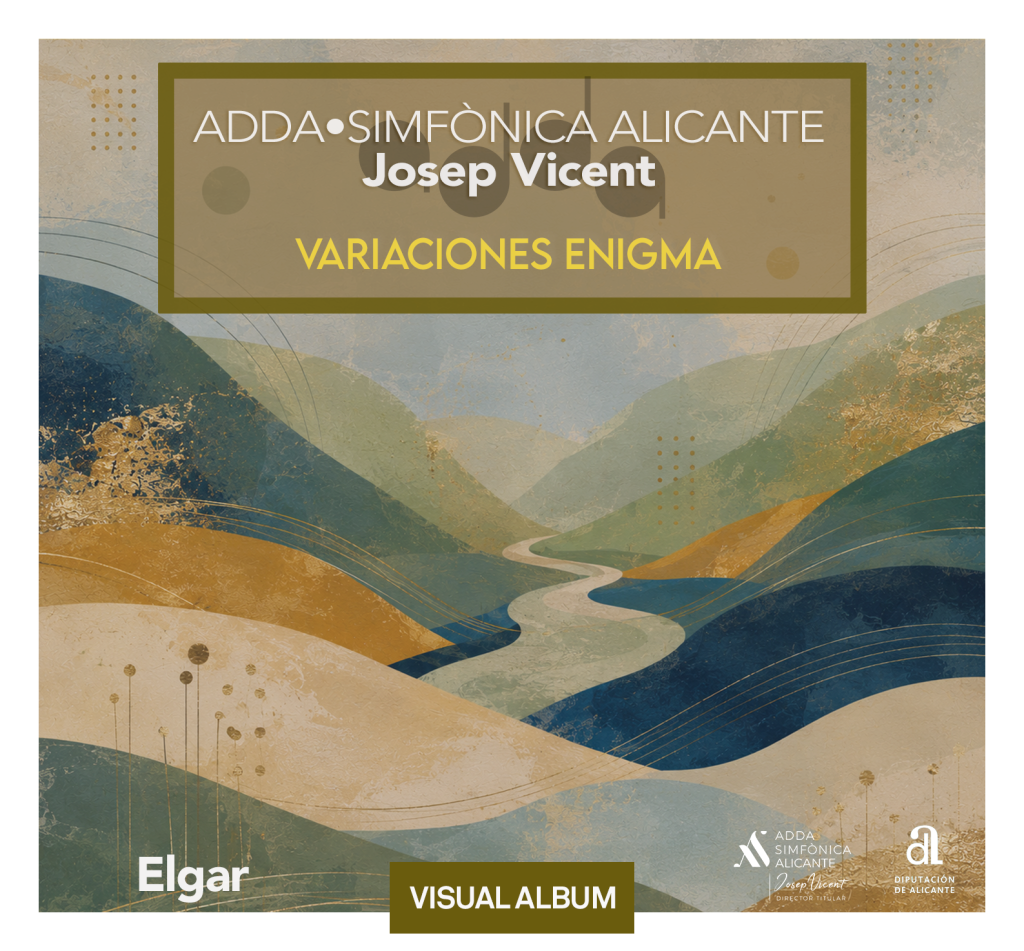
In the “Enigma Variations”, Edward Elgar transforms the orchestra into a space of memory and complicity, where each variation suggests a character, an emotion, or a presence. The enigma—never revealed—permeates the work like an open question, inviting the listener to look beyond what is immediately apparent. Amidst contrasts of mood, lyricism, and energy, “Nimrod” stands as the emotional core: a moment suspended in time, defined by a sense of restrained intensity. For the ADDA Simfònica, this score becomes a visual and sonic journey into collective identity, in which individual expression merges into a single, shared voice.
VISUAL - ALBUMS
ADDA·SIMFÒNICA
Among the experiences we have on stage, there are moments that, for various reasons, remain etched in our memory.
…It is from these elements that the Visual Albums have been created…

Pictures at an Exhibition
In 1874, Mussorgsky composed *Pictures at an Exhibition*, inspired by a posthumous exhibition dedicated to his friend, the painter and architect Viktor Hartmann. Originally conceived for piano, the cycle translates visual impressions into music, with the composer himself appearing as a “stroller” moving among the various works—an approach that anticipates the quest for a synthesis of color, sound, and movement. Among its various orchestrations, the version created by Maurice Ravel in 1922 has become the definitive one, masterfully exploiting the score’s rich palette of timbres and colors. The work, structured around recurring “Promenades,” culminates in the monumental *The Great Gate of kyiv*, featuring a grand, full-scale display of the entire orchestra.

Ithaca (world premiere)
Composed by Ximo Cano to inaugurate the 2026/27 symphonic season of ADDA·SIMFÒNICA, under the direction of maestro Josep Vicent, “Ítaca” is an overture with minimalist inspiration and an essentially tonal musical language. The work stems from a single melodic idea that evolves and reappears throughout the musical narrative. Following an introduction of great expressive intensity, the tension builds progressively toward a powerful climax, culminating in a luminous, resounding finale that restores harmonic balance. It is an invitation to surrender to a soundscape in which every transformation leads toward a new horizon.
Firebird
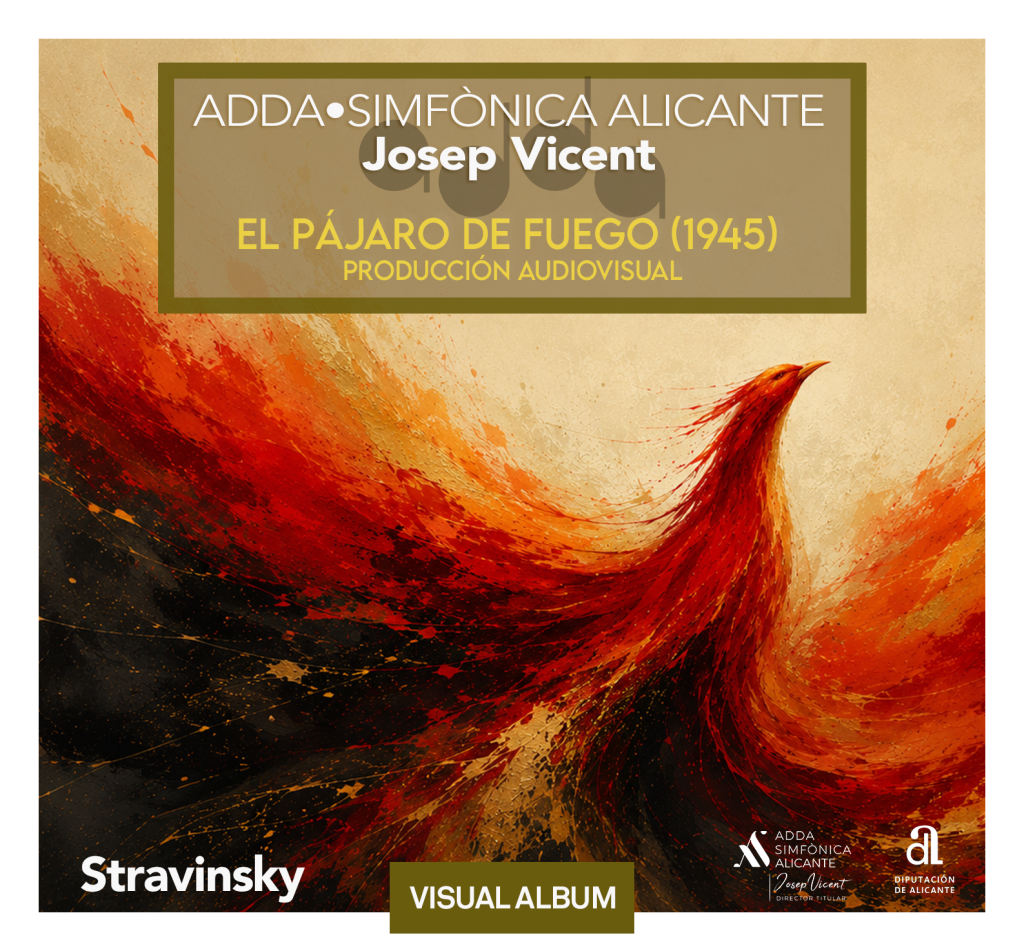
The premiere of “The Firebird” in Paris in 1910 marked the beginning of the successful career of Igor Stravinsky, who, despite having studied law, received his musical training under Rimsky-Korsakov. Commissioned by Diaghilev for the Ballets Russes, the work—inspired by a Russian folktale—was an immediate success. It launched a trilogy of collaborations with Diaghilev, which also includes “Petrushka” (1911) and “The Rite of Spring” (1913). “The Firebird” is characterized by a fusion of Russian tradition with influences from Debussy and Rimsky-Korsakov. Stravinsky created three orchestral suites based on the ballet, the second of which is the most frequently performed. The work is also presented with a synchronized projection as part of the “Symphonic Cinema” project.

1001 Nights in the Harem
Fazıl Say’s Violin Concerto offers a sonic journey loosely inspired by “One Thousand and One Nights”, structured in four movements.
The work travels from the atmosphere of a harem to a night of dance brimming with energy. The third movement provides a more serene contrast, based on variations of a Turkish folk song.
The finale revisits earlier episodes, transforming them into a dreamlike recollection. The orchestra contributes a distinct Oriental flavor through its use of percussion.
The solo violin—written with great virtuosity—serves as the narrator and the expressive focal point of the entire concerto.
Mystical and profane
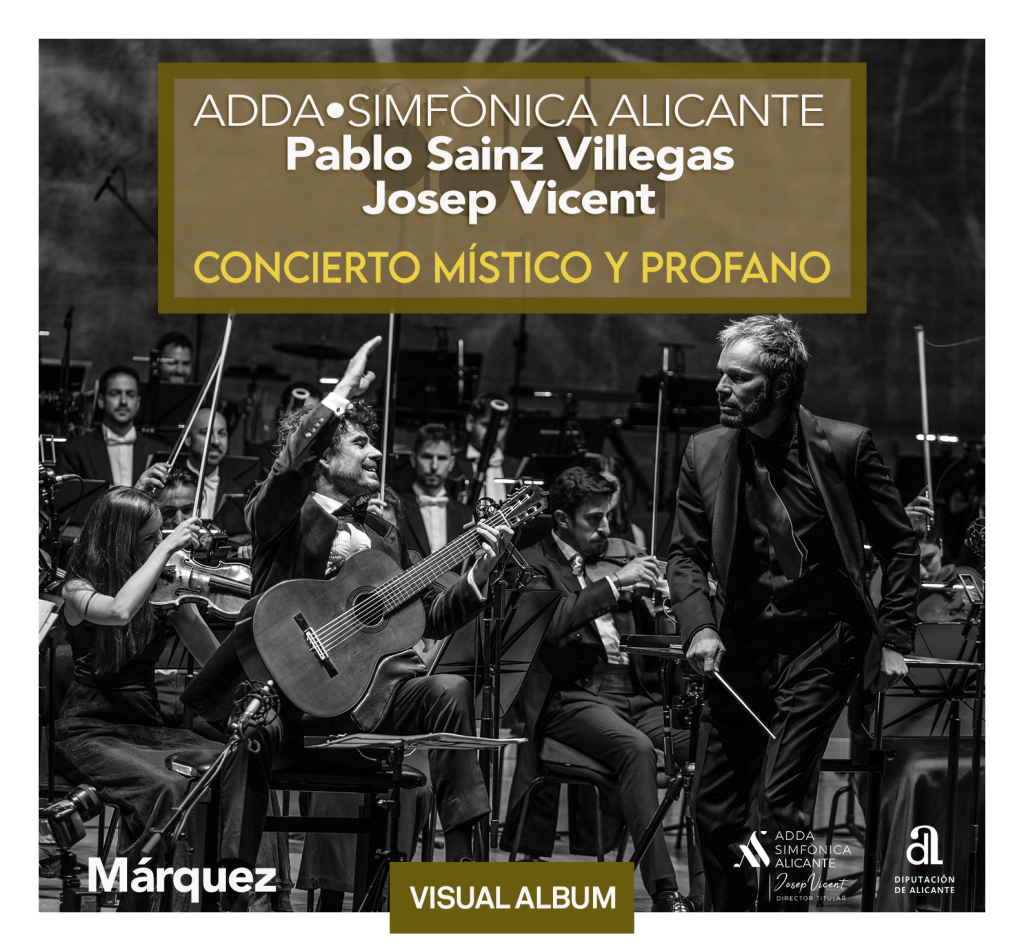
Arturo Márquez—the most frequently performed living Mexican composer and creator of the celebrated *Danzón No. 2*—masterfully fuses folk tradition with the orchestra. His new *Concierto Místico y Profano*, composed for Spanish guitarist Pablo Sáinz Villegas and premiered in Houston in 2024, was presented here for the first time in Spain. The three-movement work draws inspiration from the *Romanesca*—a musical form dating back to the 16th century—and combines the solo guitar with a rich orchestral palette that incorporates Latin American percussion instruments.

Nostalgia and the Fire
During the youth of Frédéric Chopin—when Poland still resonated in his memory and Paris was merely a future destination—his Piano Concerto No. 2 in F minor came into being. Composed in the winter of 1829, this work captures the intensity of a sensitive, precocious spirit: the drama of an impending exile, a deeply expressive *cantabile* lyricism, and the unmistakable pulse of the Polish homeland. The piano sings with fluidity and brilliance, pausing to dream within a *Larghetto* of delicate introspection—a movement admired by both Robert Schumann and Franz Liszt—and culminates in a finale where the mazurka and the waltz intertwine. Dedicated to Countess Delphine Potocka, this concerto does more than just herald the great Romantic Chopin; it reveals him in his full stature, poised between melancholy and ardor.

Intuition, originality, and legacy
Alejo Carpentier reflects on Mussorgsky, highlighting his brilliant intuition and his ability to overcome technical challenges. A member of “The Five,” Mussorgsky is renowned for his operas *Boris Godunov* and *Khovanshchina*, as well as for *Pictures at an Exhibition*—a work later transcribed by Ravel. The piece *St. John’s Eve*, which originated in his opera *The Fair at Sorochyntsi*, remained unpublished until 1968, when the original 1867 version came to light. His colleague Rimsky-Korsakov created a popular orchestral version in 1886. By the end of the 20th century, attention was drawn to the harmonic originality of Mussorgsky’s work, particularly in his settings of Russian folk dances and songs.

Our inescapable destiny in a symphony…
In his Fourth Symphony, Tchaikovsky (Votkinsk, 1840 – Saint Petersburg, 1893) achieves a profound exaltation of emotion—moments of joy that allow us to forget ourselves, even though our inescapable destiny ultimately always emerges.
A unique experience
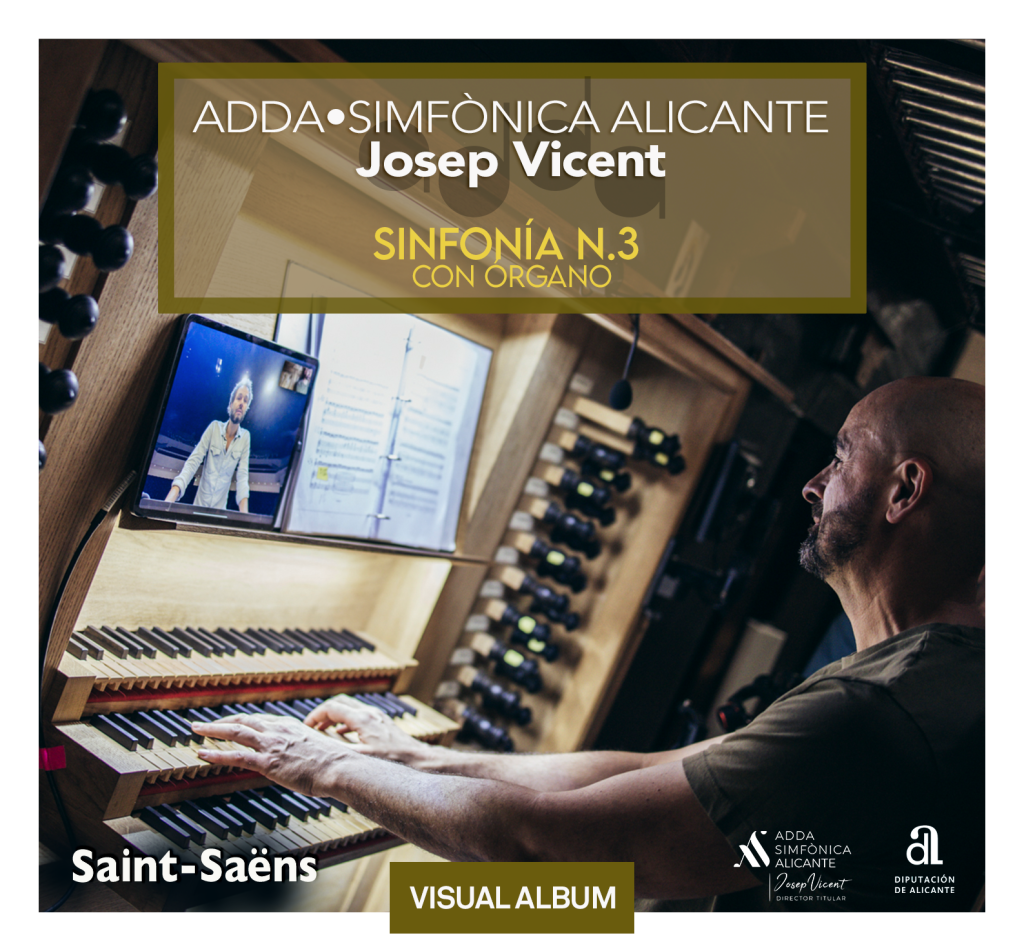
It is the only one of the five symphonies composed by Saint-Saëns that remains in the concert hall repertoire. Camille Saint-Saëns—a piano prodigy and organist at La Madeleine in Paris—was admired by Berlioz and Liszt, the latter of whom championed his *Samson and Delilah* in Germany. His Symphony No. 3, written in 1885–86 and dedicated to the memory of Liszt, is notable for its inclusion of the organ and piano within a cyclical structure that permeates the entire work. For the first time, a Spanish orchestra has performed it with a live organ—broadcast from the Co-cathedral of San Nicolás—offering an exceptional sonic experience that blended the majesty of the instrument with orchestral richness, achieved with absolute masterful balance.
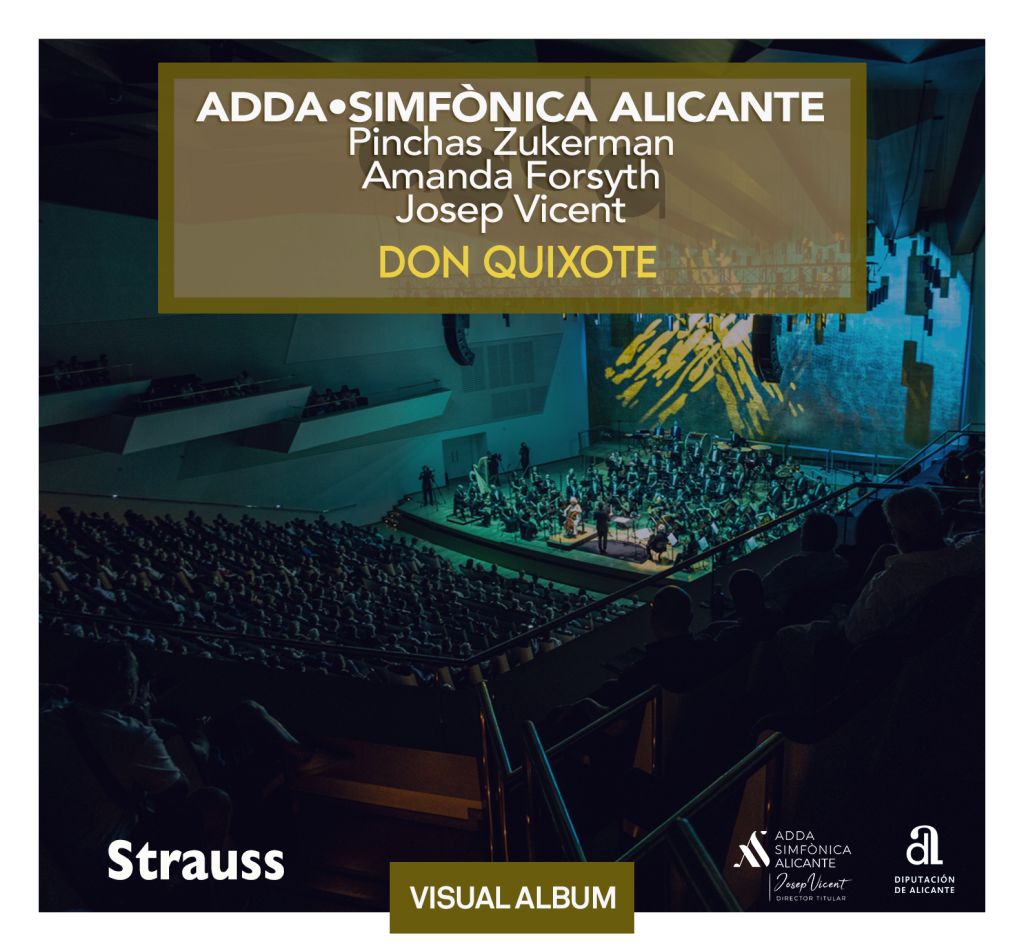
Strauss and the Soul of Don Quixote
Fascinated by Daumier’s drawings and the idealism of Don Quixote, Richard Strauss composed a symphonic poem in 1897 inspired by Cervantes’s hero—remarking, “There is a bit of Don Quixote in each of us….” Premiered in 1898, the work casts the cello as the voice of the knight, while the viola represents Sancho Panza. Through nine variations, Strauss recreates the nobleman’s adventures—from the encounter with the windmills to the flight on Clavileño—with a blend of humor, lyricism, and drama, in a score that brilliantly fuses music and literature.
The Great American Symphony
Copland’s Third Symphony, composed between 1944 and 1946, was conceived as a “Great American Symphony” to celebrate the end of the Second World War. It premiered on October 18, 1946, performed by the Boston Symphony Orchestra under the direction of Serge Koussevitzky, who regarded it as “the greatest American symphony.” The four-movement work combines a majestic style with modern influences and concludes with a powerful reference to his *Fanfare for the Common Man*—a symbol of hope and triumph. Although Copland incorporates few folk elements into this piece, its emotional intensity and epic character have made it one of his most significant compositions.
Notas al programa: José María Perea