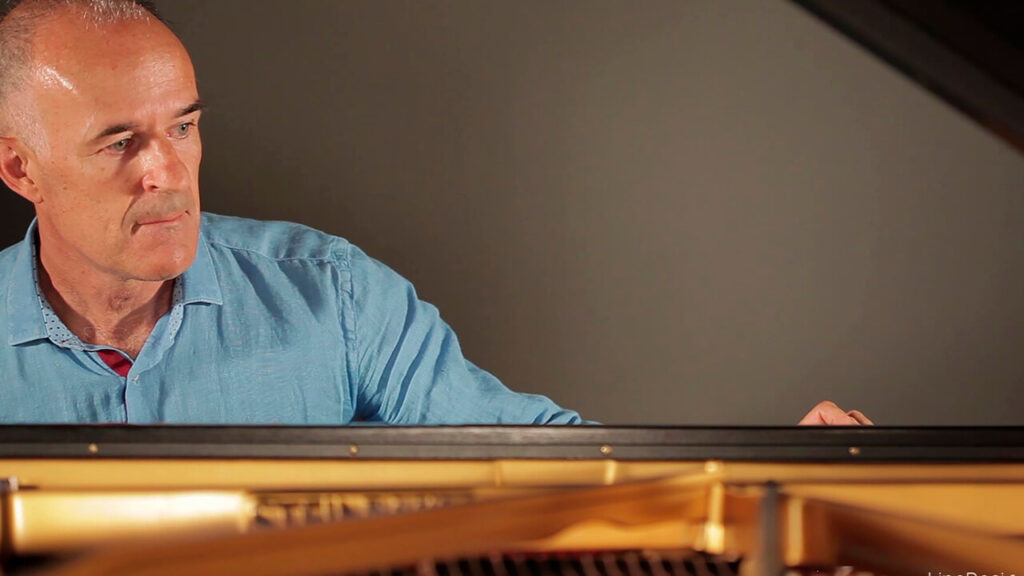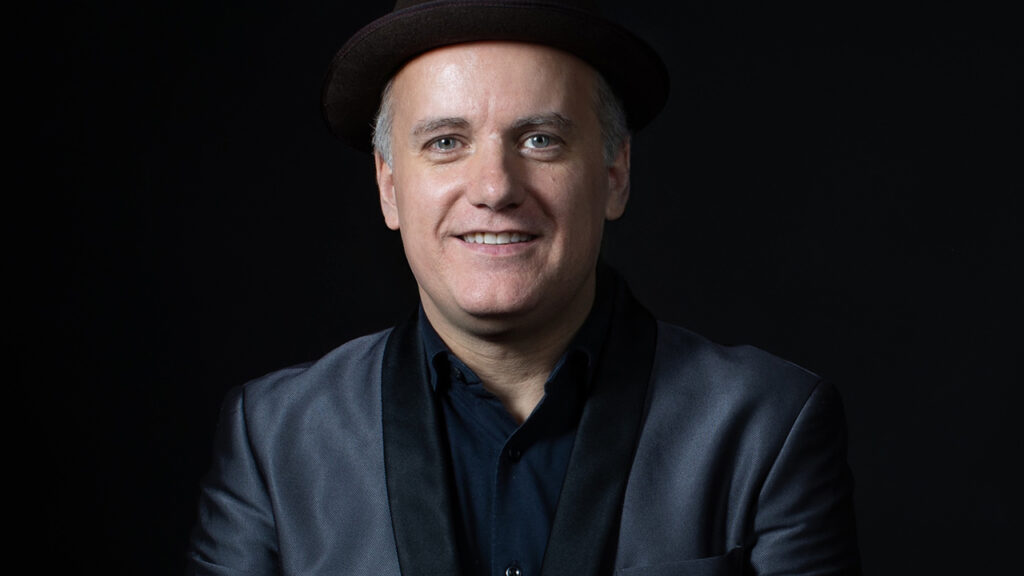


Josu de Solaun, piano
Program:
Twenty-one mazurkas
Frédéric Chopin (1810 –1849)
Op. 68 No. 3 in F major – Allegro, ma non troppo
Op. 17 no. 2 in E minor – Lento, ma non troppo
Op. 50 No. 1 in G major – Vivace Op. 33 No. 1 in G# minor – Mesto Op. 17 No. 3 in Lab major
Op. 7 No. 2 in A minor – Vivo, ma non troppo
Op. 56 No. 3 in C minor – Moderato Posthumous Mazurka in Bb major
Op. 63 No. 3 in F minor – Lento Op. 30 No. 2 in B minor – Allegretto
Op. 41 no. 4 in A major – Allegretto Op. 17 no. 4 in A minor – Lento, ma non troppo
Op. 33 No. 3 in C major – Semplice Op. 67 No. 2 in G minor – Cantabile Op. 7 No. 1 in Bb major – Vivace
Op. 41 No. 2 in A minor – Andantino Posthumous Mazurca in G major
Op. 67 No. 4 in A minor – Allegretto Op. 59 No. 2 in Lab major – Allegretto Op. 24 No. 3 in Lab major – Moderato, with anima
Posthumous Mazurka in D major – Poco mosso
21 Tientos
JOSU DE SOLAUN (1981 –)
I. Tender of Tearing
II. Temptation of the Echoes
III. Temptation of the Infinite Chant
IV. Tiento of the Columns
V. Temptation of the Serene Flame
VI. Temptation of the Hours
VII. Prelude of the Threshold
VIII. Prelude of the Starry Night
IX. Prelude of the World’s Hum
X. Prelude of the Water Mirror
XI. Prelude of the Hidden Angel
XII. Prelude of the Wandering Crystal XIII. Prelude of Mineral Silence
XIV. Prelude of Open Flight
XV. Prelude of the Human Roar
XVI. Prelude of the City
XVII. Prelude of the Cosmos
XVIII. Prelude of the Spirit of the South
XIX. Prelude of the Wise Iron Tree
XX. Prelude of the Carpathians
XXI. Prelude of Permanent Exile
TWENTY-ONE MAZURKAS AND 21 TIENTOS
Twenty-one Mazurkas and 21 Tientos
Frédéric Chopin (1810–1849)
The mazurkas constitute the most intimate and personal genre within Chopin’s entire body of work. Over the course of his life, he composed nearly sixty of them; it was in this format that he explored the expressive possibilities of the piano with the greatest freedom, unconstrained by the conventions of the sonata or the concerto.
This selection of twenty-one mazurkas spans the Polish composer’s entire creative trajectory—from his early, youthful works to the more concentrated and enigmatic pieces of his maturity. Each work is a self-contained universe, a brief scene in which the ternary rhythm of the mazurka—with its unpredictable accents and its aura of a peasant dance—becomes a vehicle for emotions ranging from the deepest melancholy to the most unbridled exuberance.
Chopin never conceived of his mazurkas as mere exotic folklore. Rather, he employed them as a personal language, in which the rhythmic gestures of Poland merge with the elegance of the *galant* tradition and the expressive depth of Romanticism. The result is music that speaks in a hushed tone, yet resonates with extraordinary intensity.
Josu De Solaun (1981–)
The *tiento* is a musical form that originated in 16th-century Spain—associated with the organ and the harpsichord—characterized by its improvisatory nature and its capacity to explore a single idea from multiple angles. It is, in essence, an attempt: a tentative approach, an exploration.
These twenty-one pieces for solo piano keep that spirit of inquiry alive. Each *tiento* develops its own sonic world, suggested by its poetic title—ranging from mineral meditation to the clamor of the city, from cosmic contemplation to the memory of exile. The piano writing seeks a great variety of timbre and texture, exploiting the instrument’s resonances and its ability to create soundscapes. The number twenty-one is no coincidence: it establishes a dialogue with the twenty-one mazurkas by Chopin that precede it in the program. A conversation across the centuries unfolds between the two cycles—two ways of understanding the piano as a mirror of the soul, two ways of condensing entire universes into a handful of minutes.
JOSU DE SOLAUN
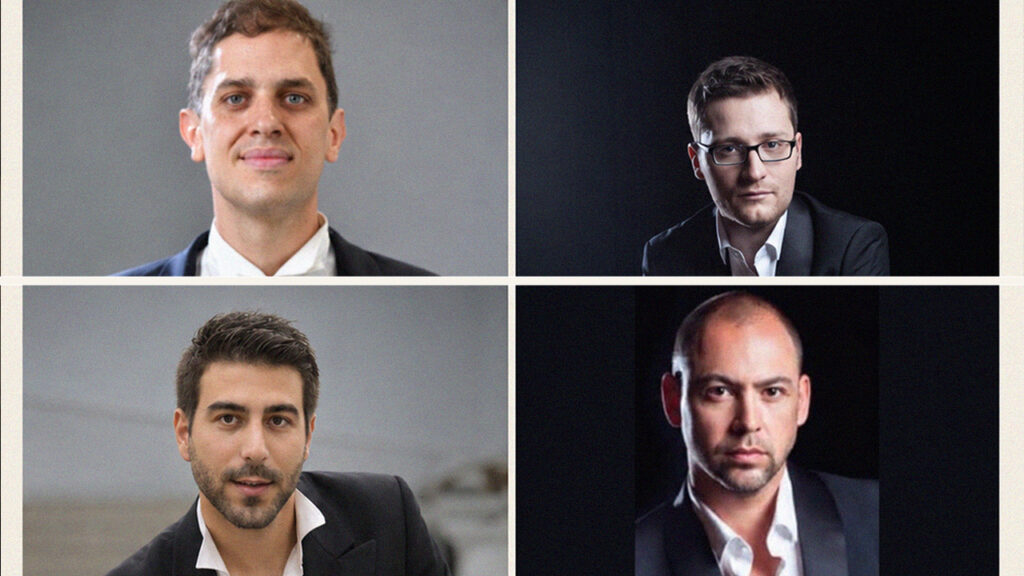
Pianist, conductor, composer, essayist and poet Josu De Solaun (Valencia, 1981) is one of the most distinctive Spanish musicians of his generation. Since 1 March 2027, he has been a professor at the Kunstuniversität Graz (Universität für Musik und darstellende Kunst Graz), a position he combines with his international career. He lives in Vienna with his wife and children.
In 2014 he won the George Enescu International Competition in Bucharest, founded in 1958 and previously won by Elisabeth Leonskaja and Radu Lupu, and in 2006 he won the José Iturbi International Piano Competition. He is the only Spanish pianist ever to have won either competition. He has received two International Classical Music Awards (2021 and 2023), and the jury described him as “one of the most impressive discoveries of the last decade”. Romania appointed him an Officer of the Order of Cultural Merit in 2019.
Writing in BBC Music Magazine, Jessica Duchen observed that “De Solaun always lets expression lead, however intense the virtuosity”.
He has performed with more than fifty orchestras, including those of the Mariinsky Theatre and Teatro La Fenice, the Moscow Chamber Orchestra, NFM Wrocław, Prague Radio Symphony Orchestra, George Enescu Philharmonic, Orquesta Sinfónica de RTVE, Orquesta Sinfónica de Galicia and ADDA·Simfònica Alicante. Recent performances have taken him to Hamburg’s Elbphilharmonie, the Romanian Athenaeum and the Fundación Juan March, as well as to the Orquesta Nacional de España under Anna Rakitina.
His discography includes the complete piano works of Enescu (Naxos); the Haydn sonatas, recognised at the ICMA; Rachmaninov’s Third and Prokofiev’s Second Concertos with the Orquesta Sinfónica de Castilla y León; Liszt’s two concertos and Totentanz and Strauss’s Burleske with the Moravian Philharmonic; Roots, recorded live at the ADDA; and After the Dance (IBS Classical, 2026), the complete Chopin mazurkas, which form the centrepiece of his Alicante recital alongside his own works. The latter recording was nominated for the 2027 ICMA.
He studied in Valencia with Salvador Chuliá, his most influential teacher, and at the Manhattan School of Music in New York, where he earned his doctorate, studying piano with Horacio Gutiérrez and Nina Svetlanova, conducting with David Gilbert, composition with Giampaolo Bracali, and chamber music with David Soyer and Isidore Cohen. He also edits the essay journal Melosías and has published the poetry collection Las grietas (Edictoràlia, 2021).